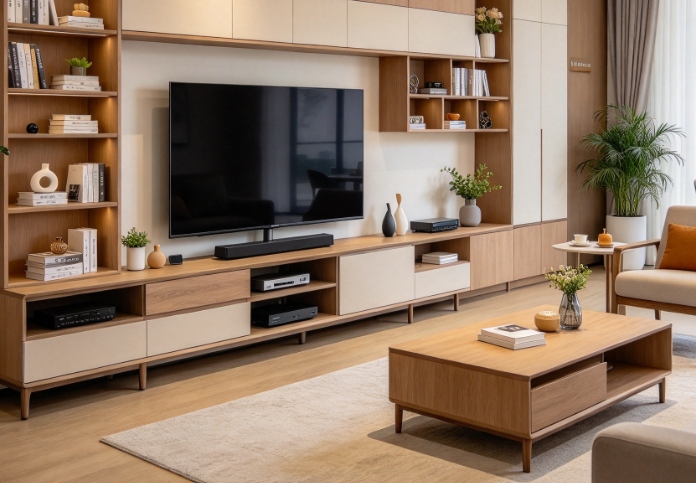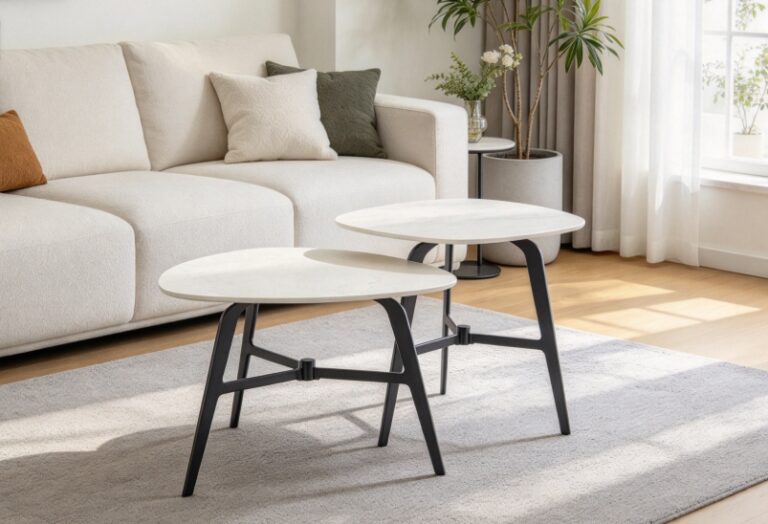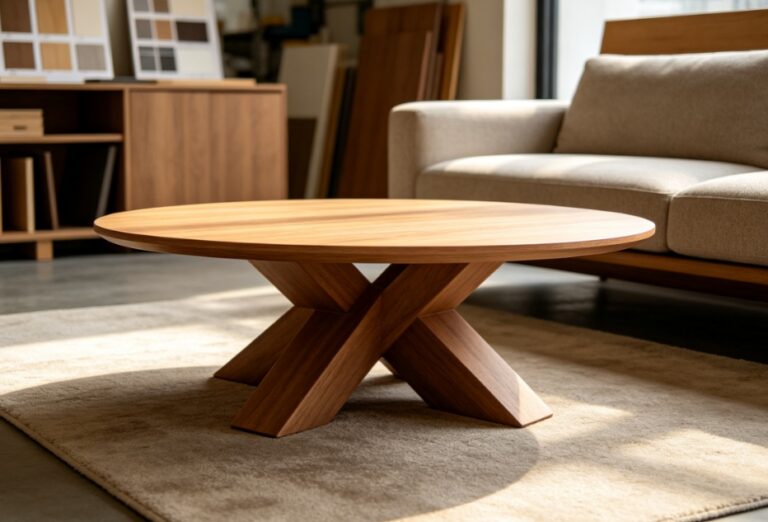
MDF coffee table production is moving beyond standard shapes and finishes. Furniture retailers, wholesalers, importers, and project buyers increasingly need products that combine a clear design identity with stable quality, practical packaging, and repeatable manufacturing. For an OEM factory, the challenge is to turn these market requirements into products that can be produced consistently across bulk orders.
Quality and Craftsmanship Define OEM Production
An MDF coffee table must remain consistent from the approved sample to the final shipment. A well-presented sample has limited value if later production shows differences in dimensions, finish, edge quality, frame alignment, or assembly performance.
Reliable production begins with a controlled specification. The drawing should identify the overall dimensions, panel thickness, tabletop shape, edge profile, surface treatment, base structure, hardware, color, and packaging method. These details give the production team a measurable reference instead of relying on a photograph or general product description.
At SANQ Furniture, we manufacture living room and dining room furniture for wholesalers, retailers, and other B2B buyers. Our production process covers material preparation, cutting, drilling, metal processing, welding, polishing, coating, assembly, inspection, and packaging. This allows the panel, frame, and connecting hardware to be checked as one complete product.
Craftsmanship is especially visible around the tabletop edge and connection points. MDF edges absorb coating differently from the flat panel surface. They must be properly sanded, sealed, primed, and finished to avoid exposed fibers, uneven paint coverage, or rough areas. Hole positions and fittings also need to remain accurate so that the table can be assembled without forcing the components into place.
MDF Supports Different Coffee Table Designs
MDF is widely used in coffee table production because it provides a smooth and consistent panel surface. It can be cut into round, rectangular, curved, and other shaped components while supporting finishes such as lacquer, decorative paper, veneer, and wood-grain treatments.
The board specification still needs to match the intended product. Buyers should confirm the MDF grade, panel thickness, surface material, edge treatment, and expected use environment. “MDF coffee table” alone does not provide enough information for an accurate quotation or production plan.
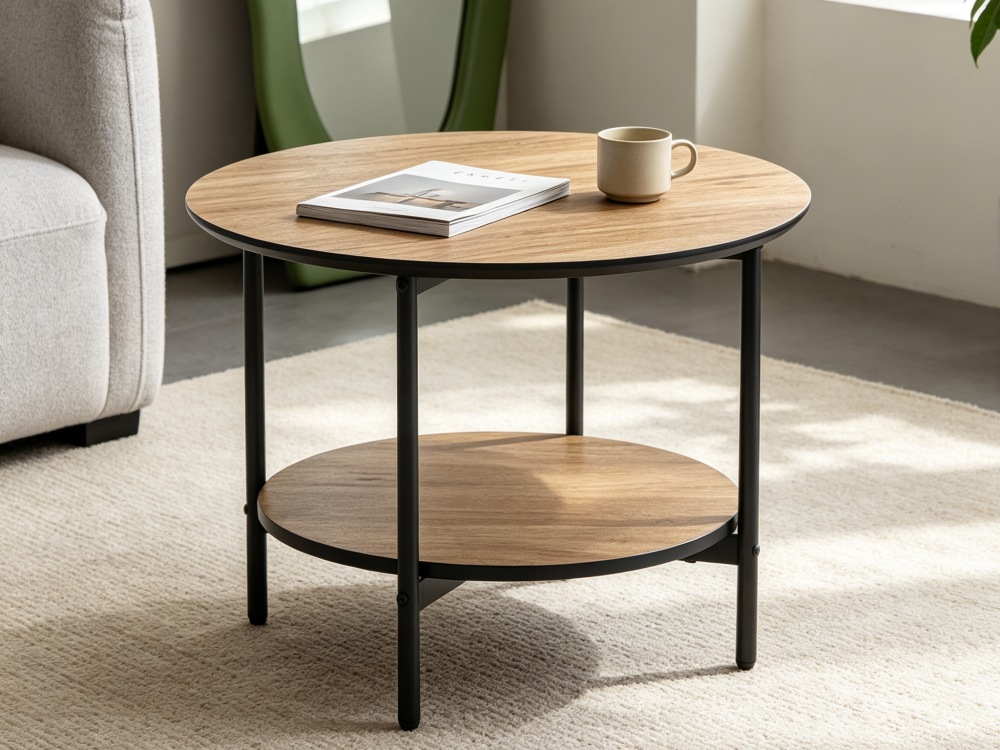
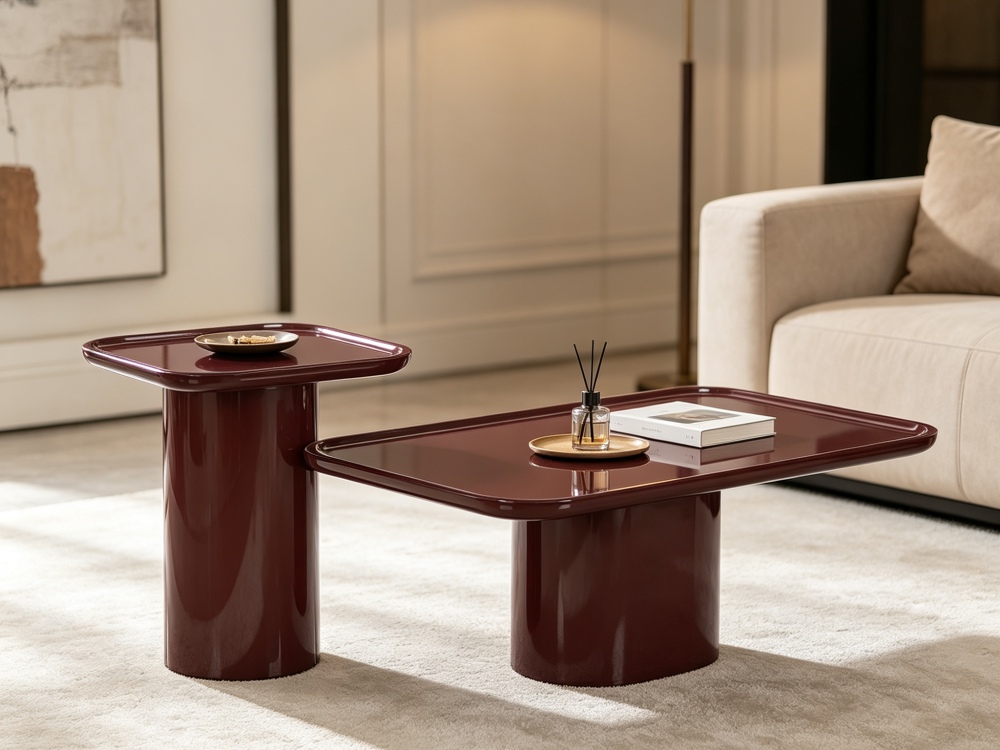
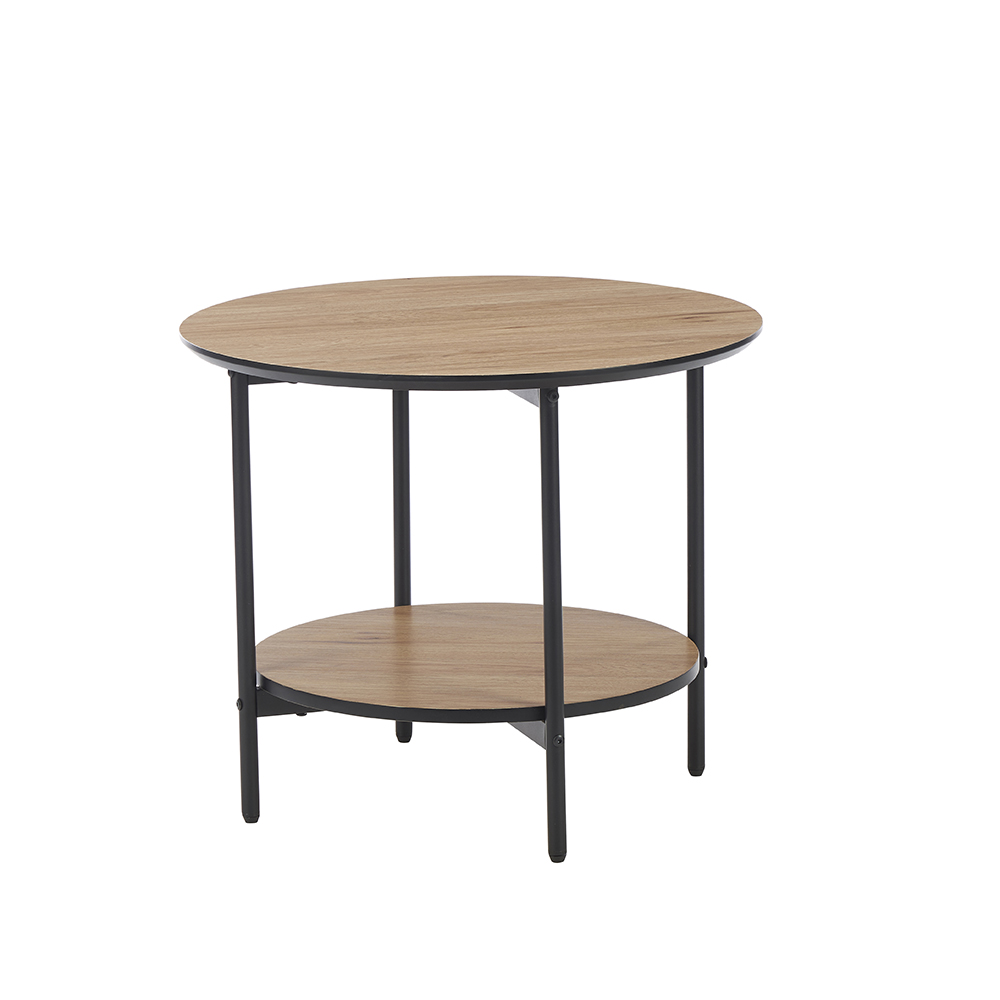
Our coffee table range includes lacquered E1-grade MDF designs as well as MDF tabletops paired with powder-coated metal frames. Some models use a 30 mm MDF tabletop to create a solid visual profile, while compact living room tables can combine an 18 mm MDF top with a 15 mm lower shelf. The additional shelf provides storage for books, magazines, or decorative items without requiring a larger tabletop.
These structures support several market positions. A lacquered round table can suit modern residential collections, while a wood-grain MDF top with a black metal frame works well in apartments, lounge areas, rental properties, and contemporary commercial interiors. MDF may also be used as a structural core beneath another surface material when a composite tabletop requires added support.
Material selection should therefore follow the design, target price, packaging requirements, and expected use rather than being treated as an isolated purchasing decision.
Design Must Balance Appearance and Production
A coffee table often acts as a visual center in a living room, reception area, or hotel lounge. Its proportions, surface finish, base shape, and color can influence how buyers perceive an entire furniture collection.
Good OEM design must also be suitable for repeat production. A highly detailed shape may look attractive in a rendering but create difficulties in edge processing, coating, packing, or assembly. The manufacturer should identify these issues before tooling and sampling begin.
Our design approach connects market trends with manufacturing feasibility. We support customer drawing development, sample development, and 3D rendering. These services allow buyers to review the appearance and structure before committing to bulk production.
During design review, we consider how the tabletop connects to the base, whether the table remains stable, how the parts fit into the carton, and whether the customer can assemble the product efficiently. For tables with metal frames, the relationship between the panel holes, brackets, tubing, and fasteners must be coordinated from the same approved drawing.
Modern minimalist designs commonly use neutral colors, simple geometric shapes, and clean metal lines. Scandinavian-influenced collections may use lighter wood tones and softer shapes, while industrial-style products often combine darker MDF finishes with visible metal structures. The design direction can change, but it must remain compatible with production and the buyer’s target market.
Customization Connects Products with the Buyer’s Market
OEM customers rarely need only a standard factory product. A retailer may require a particular color range, a distributor may need compact packaging, and a project buyer may need dimensions that fit a defined floor plan.
MDF coffee table customization can cover:
- Tabletop dimensions and thickness
- Round, square, rectangular, or shaped profiles
- Lacquer color and gloss level
- Wood-grain paper or veneer tone
- Metal frame shape and powder-coated finish
- Edge profile and connection structure
- Hardware and assembly instructions
- Labels, logos, barcodes, and carton artwork
At SANQ Furniture, we provide OEM and ODM support for material, dimension, color, finish, structure, and packaging changes. Buyers can begin with an existing design or submit their own drawing for development.
The sample stage confirms whether the design can be reproduced under production conditions. Our sample process includes requirement confirmation, design review, raw-material preparation, production, inspection, and customer approval. Sample development normally takes 7–10 days, depending on the number of styles and the complexity of the requested changes.
Buyers should assess more than appearance when approving the sample. Dimensions, stability, edge smoothness, color, hardware fit, assembly time, surface quality, and packaging arrangement should all be checked. The approved sample and drawing then become the reference for the production order.
Quality Control Continues Through the Full Order
MDF coffee table quality depends on several connected processes. A suitable board can still produce a poor table if the edge sealing, drilling, coating, frame fabrication, or assembly is inconsistent.
Our quality control begins with incoming materials. MDF panels, metal components, surface materials, coatings, and hardware are checked before entering production. In-process inspections focus on machining accuracy, connection positions, structural alignment, coating quality, and sample consistency.
Finished coffee tables are checked for scratches, dents, visible color variation, rough edges, loose hardware, unstable bases, and incorrect labels. The table should stand evenly on a level surface, while all connecting parts should align with the approved drawing.
We conduct visual and safety inspections on finished products and select samples for additional performance and environmental compliance checks. Products that do not meet the approved requirements are isolated and corrected before release.
This process is important for branded collections because one inconsistent product can affect an entire shipment. Retailers and distributors need the same finish and structure across repeat orders, not only within one carton.
Export Packaging Protects the Finished Product
Packaging is part of OEM product engineering. MDF edges and lacquered surfaces can be damaged by impact or movement during container transport, even when the coffee table leaves the production line in acceptable condition.
Knock-down construction is commonly used to reduce package volume and improve container utilization. The tabletop, frame, hardware, and other components can be separated and protected within the carton. The connection structure must still allow the customer to assemble the table securely.
Our export packaging can be adjusted according to the product structure and sales channel. Surface protection prevents parts from rubbing together, while corner protection helps reduce impact damage. Hardware is packed separately and positioned so that it cannot scratch the tabletop.
Carton dimensions, gross weight, shipping marks, barcode positions, assembly instructions, and loading quantity should be confirmed before bulk packaging begins. Private-label buyers can also customize printed cartons, product labels, instruction sheets, and other packaging information.
Manufacturing Capacity Supports Long-Term Cooperation
OEM cooperation often continues beyond the first order. A buyer may launch a trial quantity, add new colors, introduce matching side tables, or reorder the same model for another season.
SANQ Furniture was established in 1991 and operates a 320,000-square-metre manufacturing facility in Hebei Province, China. Our product range includes coffee tables, dining tables, dining chairs, cabinets, and other furniture for living and dining spaces.
Our integrated production and supply chain support bulk purchasing as well as customized projects. MDF coffee table orders generally begin at approximately 50 pieces, although the final MOQ depends on the structure, finish, and packaging requirements. Standard production lead time is usually 30–45 days after the design, materials, and sample have been approved.
Stable cooperation depends on clear technical information and realistic scheduling. Before production, both parties should confirm the drawing, material specification, finish sample, order quantity, inspection requirements, packaging, and delivery date. This reduces changes during production and gives the factory a consistent basis for repeat orders.
Develop Your MDF Coffee Table Project with SANQ
Send us your product drawing, reference image, target dimensions, finish, quantity, and destination market. The SANQ Furniture team can review the design, recommend a workable MDF and structural solution, and prepare an OEM or ODM quotation. You can also consult our team before completing the drawing to identify possible production, assembly, or packaging issues.
FAQ
What information is required for an MDF coffee table quotation?
Buyers should provide the dimensions, MDF grade, panel thickness, surface finish, frame material, color, quantity, packaging requirements, and destination market. A drawing or reference image will improve quotation accuracy.
Can SANQ customize MDF coffee tables for private labels?
Yes. We support changes to dimensions, materials, colors, finishes, metal frames, hardware, labels, instructions, and carton artwork. Custom requirements should be confirmed through drawings and an approved sample.
How long does an OEM coffee table order take?
Sample development normally takes 7–10 days. Standard bulk production generally takes 30–45 days after the sample, materials, and order details have been approved. Complex structures or special finishes may require additional time.
Why is KD packaging suitable for MDF coffee tables?
KD packaging separates major components to reduce carton volume and improve container loading. It can also provide better protection for tabletops and frames, provided that the hardware, internal supports, and assembly instructions are properly arranged.