Introduction
A table is correctly sized only when diners can sit, move, and circulate comfortably in the actual room. Nominal seat count is not enough because chair width, arms, pedestal position, tabletop thickness, service style, and accessibility all change the usable layout. This guide gives retailers, hospitality buyers, designers, and importers a practical method for selecting dining table size and style.
Size the Table Around People, Chairs, and Movement
Begin with the room plan and mark doors, circulation paths, sideboards, columns, and fixed services. Add the table, chairs in the occupied position, and the movement zone behind them. For commercial layouts, review local building, fire, and accessibility requirements before purchasing. The product schedule should record the intended chair, not just a generic chair symbol.
Translate Seating Capacity Into a Dimension Brief
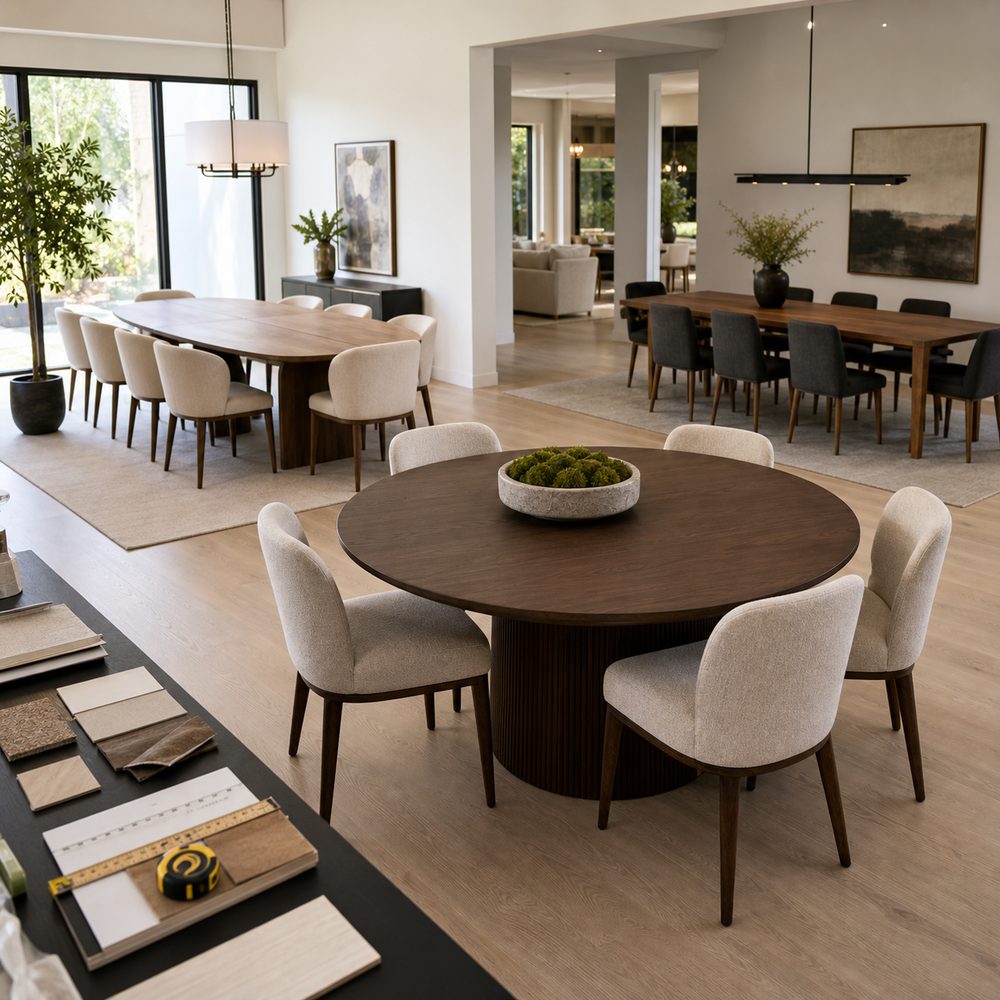
Allow space per diner based on the intended chair and place setting, then test the result. Wider armchairs and formal settings need more edge length than compact armless chairs. Rectangular tables distribute seats along long edges; oval tables soften corners; square tables create equal positions but become conversation-challenging when very large. A round dining table supports face-to-face interaction and circulation around corners, but its diameter grows quickly as seating count rises.
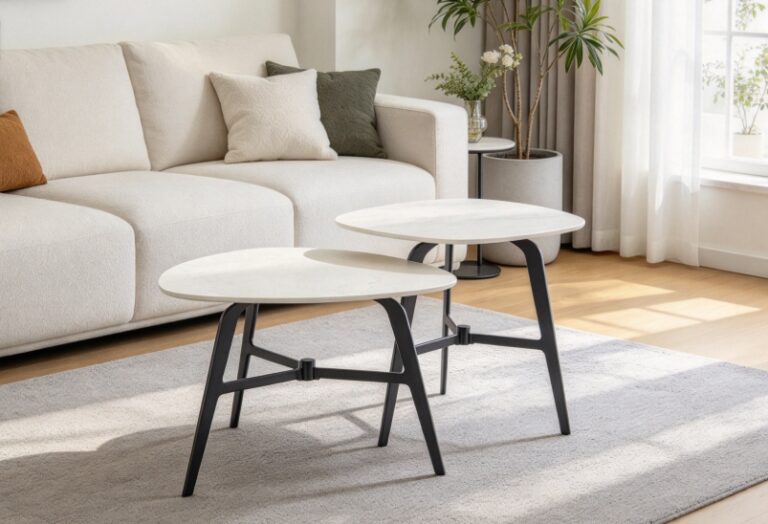
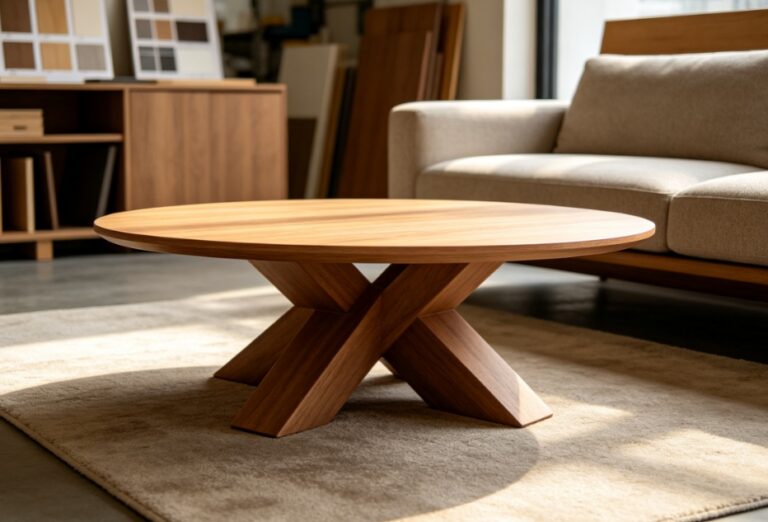
SANQ Furniture’s BJ-2419 provides a model-specific reference: an 800 mm round sintered-stone top intended for two to four people, with a compact steel frame. DT-2410 measures 1600 x 900 x 750 mm for a more conventional rectangular layout. DT-25046 is listed at 1400 x 1200 x 750 mm with a pedestal base and an intended four-to-six-seat arrangement depending on chair size.
Use Shape and Base Geometry Together
Table shape controls circulation, while the base controls where chairs can actually sit. Four corner legs are simple but can block end positions. Trestles may restrict knees near the supports. Pedestal bases free the corners and can improve chair flexibility, but the base footprint and tipping resistance must be engineered for the top. Extension leaves add capacity but also introduce seams, rails, locks, and a different center of gravity.
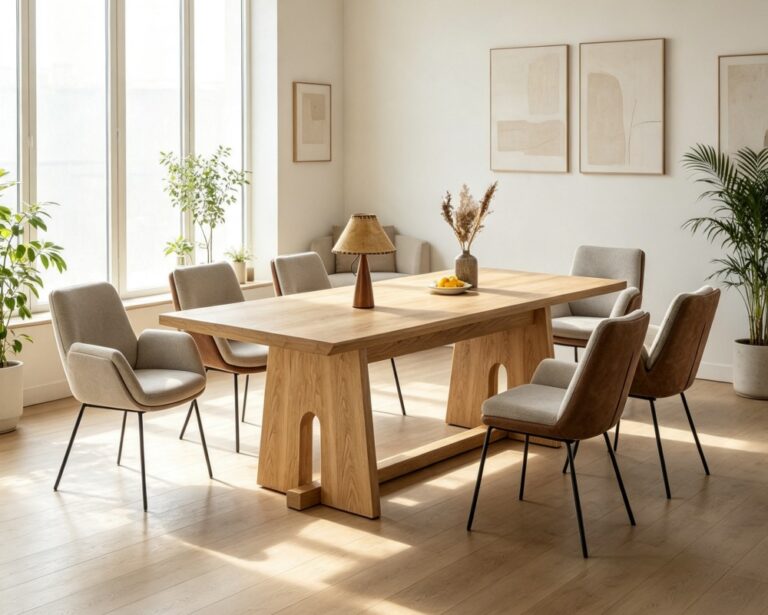
The DT-25066 example combines an oval extendable top with a fluted pedestal and approximately 720 mm clearance from floor to underside. It has a 35 mm MDF core with wood veneer and export-oriented KD packing. Final extension dimensions remain subject to confirmation, so a buyer should not plan capacity from a concept description alone.

Practical Selection Matrix
The table below connects common layouts with the questions a buyer should resolve.
| Table form | Typical strength | Main constraint to check |
| Rectangular | Efficient for linear rooms and larger groups | Corner legs, end seating, and aisle width |
| Round | Social layout and softened circulation | Diameter, central reach, and pedestal footprint |
| Oval | More fluid corners with useful length | End width, chair spacing, and extension seam |
| Square | Balanced positions in compact groups | Large sizes increase center reach |
| Extendable | Flexible daily and event capacity | Mechanism, leaf storage, alignment, and stability |
Check Height, Legroom, and Accessibility
Most product ranges cluster around a familiar dining height, but top thickness and aprons determine actual leg clearance. Match chair seat height and arm height to the underside, then test knees, crossing legs, and approach. For U.S. accessible dining surfaces, the ADA Standards specify a top height from 28 to 34 inches and require compliant clear floor, knee, and toe space. Other markets have their own rules.
A dining table size decision should therefore include surface height, underside clearance, clear width, clear depth, and approach direction. Accessible positions also need a usable route when surrounding chairs are occupied. For restaurants, coordinate the layout with the architect or code professional rather than assuming a movable chair automatically makes a table compliant.
Choose Materials and Styles for the Sales Context
Material changes the visual language, care instructions, weight, packaging, and price. Sintered stone suits buyers seeking a hard, heat- and scratch-resistant surface; tempered glass creates visual openness but requires edge and transport control; veneer provides natural variation over an engineered core; melamine supports repeatable color and easier maintenance. Claims should follow the tested composition of the selected model.
Among current dining table styles, buyers are balancing warm wood effects, sculptural pedestal forms, stone surfaces, softened oval profiles, and extendable functions. Trend relevance should not override the channel. A rental project may value replaceable parts and stable finishes; a premium retailer may accept more variation in veneer; an e-commerce range must prioritize carton size and assembly clarity.
Dining table styles should also be screened for serviceability. A replaceable extension rail, standard fastener, repairable finish, or separable base can extend useful life. For a round dining table, confirm that the pedestal and floor-contact area remain stable at the specified diameter and top weight.
Validate the Product Before Ordering
Request dimensioned drawings, material layers, finish samples, assembly instructions, carton data, and model-specific MOQ and lead time. Build one table with the intended chairs and check level contact, wobble, top alignment, base position, occupied clearance, and extension operation. ISO 19682 identifies tests for table and desk stability, strength, and durability; specify the exact requirement and acceptance criteria relevant to the project.
For a dining table size review, share the room plan, seating target, chair dimensions, preferred shape, material, destination, quantity, and testing needs. Upload these details through our quotation page and we can recommend suitable dining table styles, including a round dining table or extendable configuration, with product-specific data.
Frequently Asked Questions
What dining table size is suitable for four people?
The answer depends on shape, chair width, place settings, base position, and circulation. An 800 mm round model may serve two to four in a compact setting, but test the actual chairs.
Is a round or rectangular table more space-efficient?
Rectangular tables often use long rooms efficiently, while round tables remove corners and can improve circulation in compact square areas. Base footprint and chair width can reverse the result.
How much clearance is needed around a dining table?
Clearance depends on occupied chairs, server or household traffic, accessibility, and local code. Draw the occupied layout and test a full bay instead of using one universal number.
Are pedestal tables better for seating flexibility?
They often free corner positions, but the pedestal footprint, top span, stability, and chair contact still need review. A wide base can obstruct feet even without corner legs.
Can SANQ Furniture customize table dimensions and finishes?
Relevant models support OEM options, subject to structural review, material availability, MOQ, tooling, packaging, testing, and written approval of the final sample.