A restaurant chair earns its verdict after a guest sits, reaches for a plate, turns to speak, and stands again. If that sequence feels awkward, the problem becomes part of the dining experience. For operators, designers, and distributors, comfort needs to be specified as a usable performance requirement, not an attractive claim.
Comfort Is a Commercial Requirement
Restaurant seating must support a range of adult users through a meal while leaving staff room to reset tables and move chairs. A chair that is too low, too deep, or too restrictive can make a planned room feel cramped.
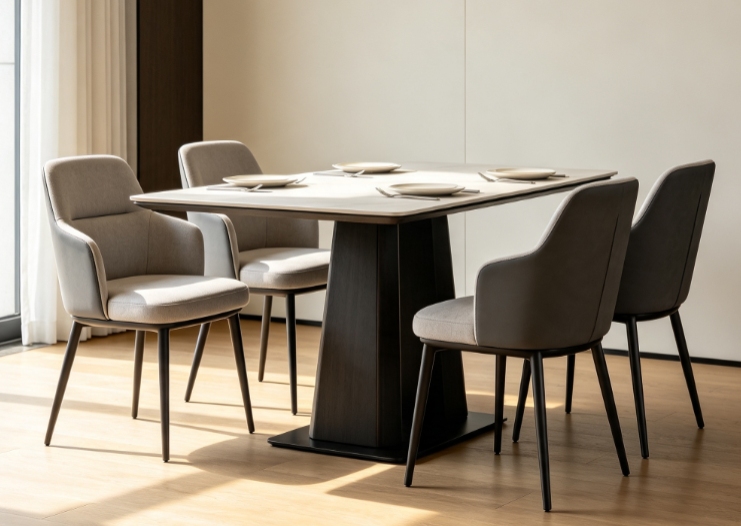
A better question is whether the seat, back, arms, base, and movement work with the table and service pattern. Start with a sample pairing, not a finish board alone.
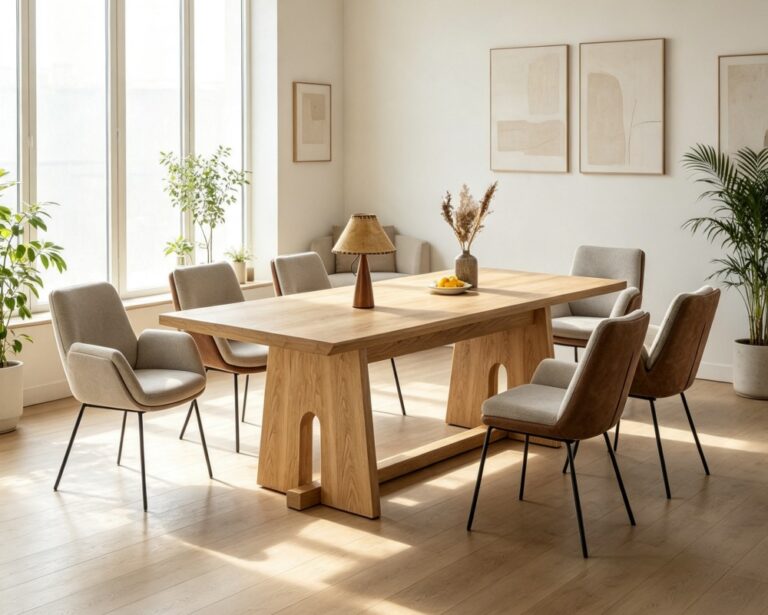
A chair works with the table, not alone
Seat height affects how naturally guests reach the tabletop, while seat depth and the back shape affect whether they can sit back without losing support. A common planning reference keeps roughly 250 to 300 mm between the finished seat and the tabletop, but the final decision should be tested against the actual table edge, cushion compression, and expected user group.
| Comfort check | What to observe | Why it matters |
| Seat-to-table fit | Forearms rest naturally. | Supports a relaxed meal. |
| Back support | The user can sit back. | Helps longer stays. |
| Arm clearance | Arms clear the table. | Protects layout capacity. |
| Movement | The chair pulls out cleanly. | Protects service flow. |
Evaluate the Sitting Position Before the Finish
A representative chair at the intended table height will reveal a comfort mismatch quickly. Ask users to lean back, reach for a place setting, turn slightly, and rise. Those simple actions expose the relationship between body, chair, and table.
Seat height, depth, and support should be read together
- Check that most trial users can place their feet on the floor without sitting on the front edge of the cushion.
- Check that the front seat edge does not press uncomfortably behind the knee when the user leans into the backrest.
- Check that armrests, when specified, allow the chair to approach the table in the intended seating position.
These checks matter when building a range of commercial dining chairs for restaurants, cafes, and hospitality projects. The aim is a balanced dining posture without creating a layout or cleaning burden for the venue.
Back, arm, and edge details influence stay time
A gently shaped back can support a relaxed position without forcing a rigid pose. Upholstery and foam help only when the shell shape supports the user. Dining chairs with arms can feel more welcoming, but they need clearance at the table and in the aisle. A smooth seat edge and stable base make entry and exit easier.
Use Sample Seating to Test the Real Service Pattern
One complete setting tested before a bulk order can reveal issues that drawings miss. Include the selected table, flooring sample, and place-setting depth. Staff pull seats, guests pivot, and adjacent tables determine the space a person actually has.
| Trial scenario | Pass condition | Decision if it fails |
| Table entry | No catching on the table. | Review width or arm height. |
| Meal posture | The user can sit back. | Review height and contour. |
| Staff reset | The chair returns easily. | Review grip and floor protection. |
| Row spacing | Passing space remains clear. | Adjust layout density. |
SANQ Furniture can use this sample-led conversation to match ergonomic dining chairs to a project setting rather than treat comfort as a generic sales label. A clear sample brief should identify the table height, intended venue type, expected seating duration, floor material, and any limits on chair width or arms.
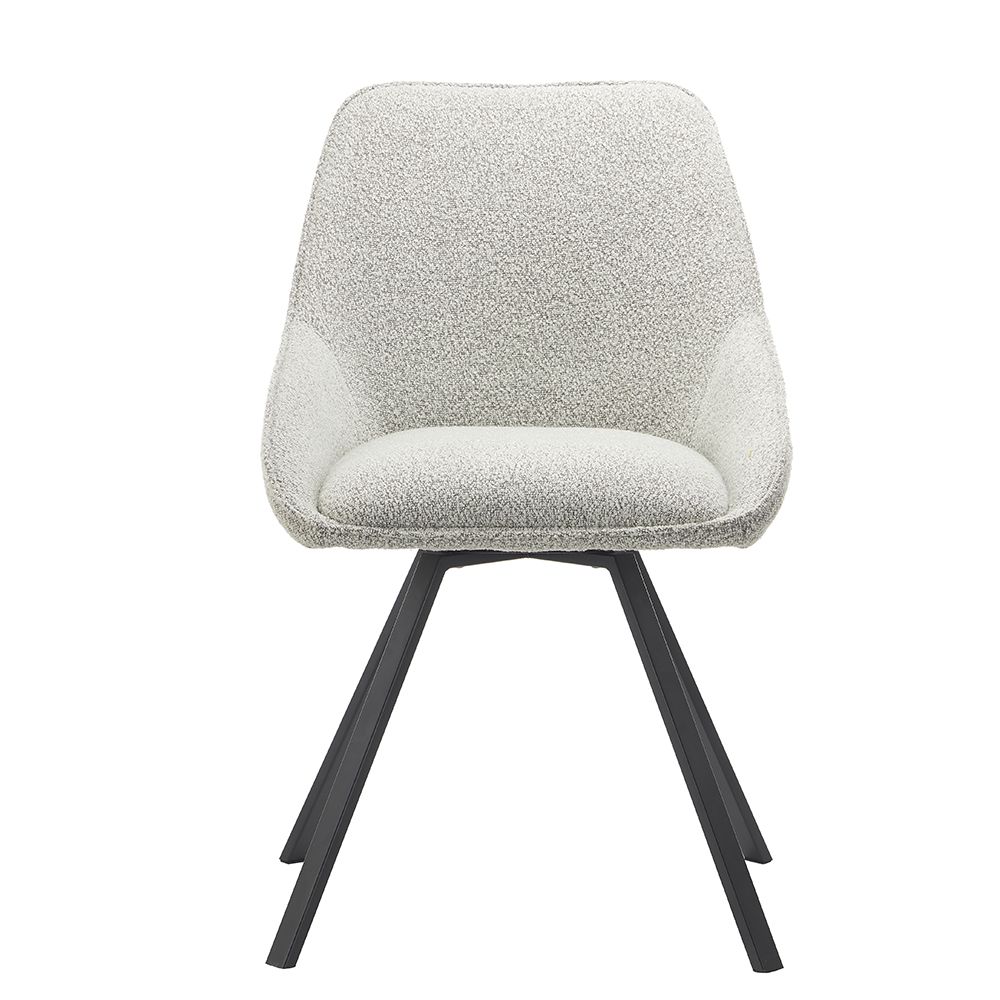
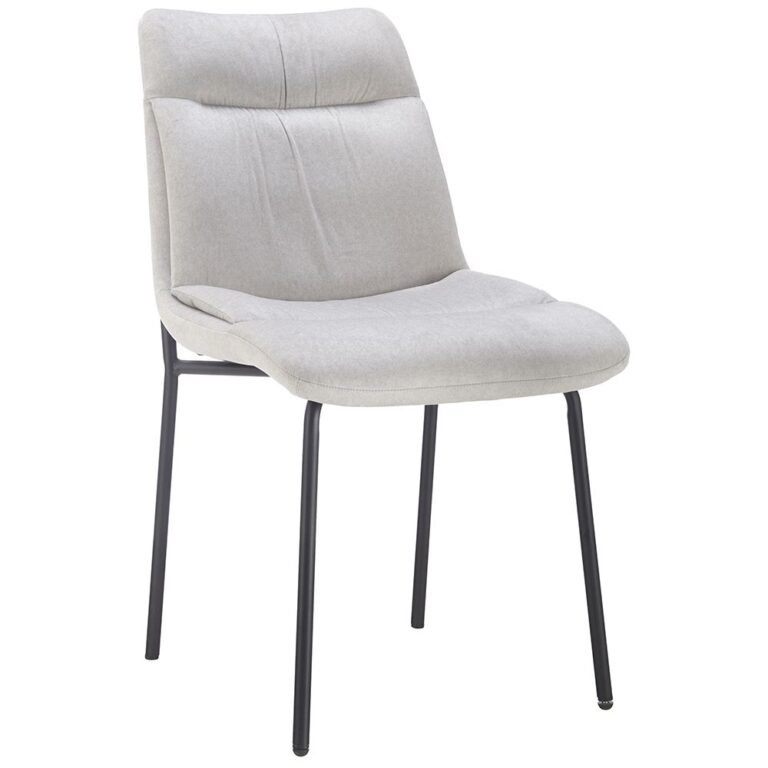
A Model Example: CY-2474-B
The CY-2474-B combines practical handling with a comfort-led form. Like other upholstered dining chairs, it uses a padded woven-fabric seat, a gently curved back with arm support, powder-coated metal legs, and a rear handle for repositioning. At 600 x 590 x 920 mm, it should still be trialed against the selected table and aisle dimensions.
For buyers assembling a coordinated range of restaurant dining chairs, the model also provides a useful discussion point for upholstery, metal finish, and branded packing options. SANQ Furniture supports OEM customization for fabric color, packaging, and product details, while the project team keeps the final comfort and clearance checks tied to the actual setting.
Specify Comfort Alongside Durability
Commercial comfort also needs repeatability. A chair that feels right in the sample room still needs stable construction, consistent upholstery workmanship, and a finish suited to restaurant use. For CY-2474-B, inspect the curved back and arms, fabric condition, powder-coated legs, rear handle, and base stability.
Make sample approval traceable
- Record the model, finish, table height, floor sample, and seating layout used in the trial.
- Note the agreed comfort observations, including arm clearance and the ability to move the chair during service.
- Keep the approved reference available for inspection so replacement or repeat orders preserve the same seating intent.
A Better Brief Produces a Better Seating Experience
Ergonomic restaurant seating is not a single measurement or a thicker cushion. It is the working relationship between seat height, table height, back support, arms, movement, and the room around the chair. Test that relationship with the actual table, then document what passed.
For a project-specific chair and table trial, share your layout and table height with our team so we can help focus the sample discussion on usable comfort and clearance.
Häufig gestellte Fragen
What makes a dining chair ergonomic for a restaurant?
It supports a balanced posture at the chosen table, lets guests enter and leave easily, and works within the venue layout. Back shape, seat height, depth, arms, and base stability matter together.
Should restaurant chairs have armrests?
Armrests can add support and a more relaxed feel, especially for longer meals. Confirm that they clear the table and do not reduce aisle space or seat count beyond the project plan.
How should a buyer test chair comfort before a bulk order?
Test a sample with the actual table height and place setting. Ask users to sit back, reach the table, stand up, and let staff complete a normal reset.
Does a padded seat guarantee comfort?
No. Padding helps, but comfort also depends on the seat shell, edge shape, back support, and the relationship between chair and table. A short physical trial is more dependable than a material description.
Why should chair movement be part of the specification?
Restaurants depend on quick, repeatable service. A chair that catches on flooring, blocks the aisle, or is difficult to reposition can undermine both staff workflow and the guest experience.