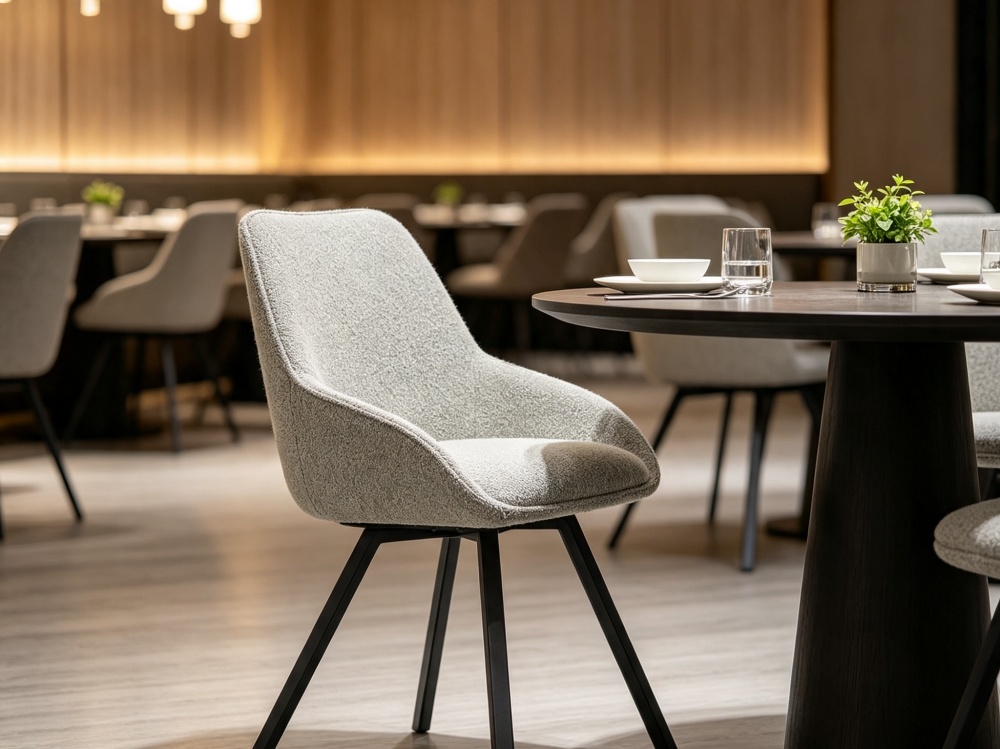
Many restaurant furniture projects face the same challenge: a chair that looks perfect in a catalogue does not always deliver the same performance in real service environments. Daily cleaning, customer turnover, space limitations, and long-term replacement needs all influence the final choice. This is why professional buyers evaluate commercial dining chairs through specifications, samples, quality checks, and supplier capability before making a wholesale purchase.
Before comparing chair models or requesting quotations, buyers first need to define what the chair must achieve in the actual operating environment. The venue layout, customer flow, cleaning process, and expected usage frequency provide the foundation for a practical chair specification.
Turn Your Restaurant Requirements into a Commercial Chair Specification
A useful chair specification begins with the operating environment. Record venue type, daily covers, indoor or sheltered use, floor material, cleaning chemicals, table height, aisle width, and chair-moving frequency. The answers narrow the field: a compact, armless chair may suit a tight cafe, while an armchair or swivel chair requires more clearance.
Space planning should be checked with physical samples rather than catalogue dimensions alone. Standard dimensions can help narrow the options, but they should not replace layout testing. Widths of 45-55 cm, depths of 40-50 cm, overall heights of 80-85 cm, and seat heights of 45-50 cm are screening ranges, not order specifications. The approved drawing remains decisive because arm height and leg spread change usable clearance.
The commercial brief should also define visual limits. Modern dining chairs often combine textile upholstery with powder-coated steel, yet fabric color, stitching, weld finishing, and coating tone need measurable references. SANQ Möbel supports model-specific fabric, finish, and packaging customization, so the specification should attach signed swatches, finish samples, drawings, and carton marks.
Compare Chair Formats against Restaurant Operations
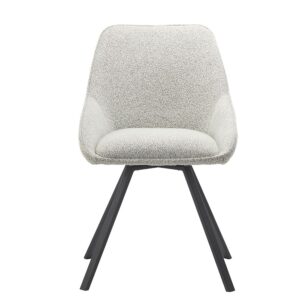
The best format reduces operational friction. Fixed-base chairs keep the mechanism simple, while swivel chairs can improve access where guests have limited room to pull a chair back. A self-return base can restore alignment, but the mechanism belongs in sample testing and inspection.
| Decision factor | Fixed-base option | Swivel or self-return option |
| Floor operation | Simple movement and fewer moving parts | Easier entry where pull-back space is limited |
| Inspection focus | Leg geometry, welds, glides, rocking | Base stability, rotation, return action, fasteners |
| Packing impact | Often compact when legs are detachable | Mechanism and base can increase carton volume |
| Best purchasing action | Confirm stacking or KD method by model | Approve cycle test and spare-parts plan |
A practical example can be seen when comparing different commercial chair models. For example, SANQ Furniture model CY-25008 shows a model-level review: a 360-degree swivel format, molded upholstered seat, T426 fabric, and white powder-coated metal legs. Its listing gives a 50-piece MOQ and a 30-45-day lead time. CY-24121 differs, with integrated armrests and a self-return swivel base. Buyers of commercial dining chairs should compare mechanism, arm clearance, fabric, and base finish model by model; specifications cannot be carried across the range.
Balance Comfort, Capacity, and Cleaning
Comfort requirements should match how customers use the space, including average dining duration and customer flow. Upholstered dining chairs can support longer meals; slim armless formats preserve aisle clearance. A sample review should cover seat firmness, lumbar contact, arm support, and ease of standing with users of different heights.
Cleaning requirements belong in the material brief. Buyers specifying modern dining chairs should request composition, colorfastness, abrasion data, care instructions, and treatment documents required by the destination market. Replaceable components may reduce disruption, but availability must be confirmed for the selected model.
Control Upholstery and Metalwork Quality
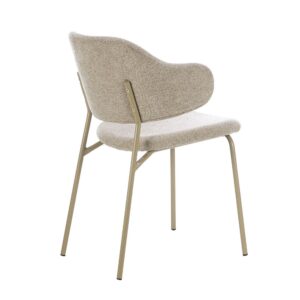
Visual quality needs to be converted into measurable inspection points before production begins. On upholstered dining chairs, inspect seam position, stitch density, fabric tension, cushion shape, color direction, and underside edges. For metal restaurant chairs, use a flat reference surface to check rocking, tube geometry, weld completion, coating uniformity, protected fasteners, and floor-compatible glides.
Inspection should cover both the sample and production lot. SANQ Furniture’s process includes a pre-production sample followed by self-inspection or an agreed third-party inspection. For CY-25008 and CY-24121, frame strength and swivel performance are identified inspection points. Buyers should convert them into a checklist with tolerances, sampling level, defect classes, and photo requirements.
Traceability should stay model-specific throughout production. Metal restaurant chairs may use different tube profiles, coatings, fabrics, and mechanisms even within one collection, so the bill of materials and approved sample should identify every controlled component. This avoids unexpected changes in materials or finishes when different models are produced under the same project.
Plan MOQ, Sampling, and Lead Time before Launch
Commercial planning should start before the final color decision. Because material availability, production schedules, and minimum order quantities can vary by finish. SANQ Furniture listings show model-specific MOQ examples at 30, 50, and 100 pieces, while many listed chair lead times are 30-45 days. Buyers must confirm the current MOQ, production window, sample timing, material availability, and quantity by finish for the exact model.
Restaurant chairs wholesale orders should reserve time for drawing review, sampling, correction, production, inspection, and shipping. A realistic schedule names each approval owner and separates factory lead time from consolidation, customs, and inland delivery.
Connect Packing Decisions to Landed Risk
Packing decisions affect damage exposure, warehouse labor, and replenishment cost. Buyers of wholesale dining chairs should request carton dimensions, pieces per carton, gross and net weight, assembly method, hardware list, drop-test requirement if applicable, and loading estimate for the confirmed configuration. Freight calculations should always be based on the confirmed packaging details of the selected model, since carton size and loading efficiency vary between designs.
Spare-parts planning should match the design. Fixed glides, swivel mechanisms, fasteners, and touch-up guidance may require different service stock, so restaurant chairs wholesale programs should agree on part codes and replacement responsibility before shipment. This is particularly important for multi-site rollouts where one missing component can delay several openings.
If you are sourcing commercial dining chairs for a restaurant, hotel, cafe, or hospitality project, SANQ Furniture can help review your requirements and recommend suitable options based on quantity, materials, customization needs, and delivery schedule. Contact our team with your project details to discuss available models and wholesale pricing.
Häufig gestellte Fragen
What makes a dining chair suitable for restaurant use?
A restaurant chair should combine structural durability, suitable materials, comfortable dimensions, easy maintenance, and consistent production quality. Frame, upholstery, geometry, glides, cleaning method, packing, and inspection plan must fit actual service conditions. Approve commercial dining chairs through a physical sample and written specification, never style alone.
Are upholstered dining chairs practical for busy venues?
Yes, provided the fabric and inspection plan fit the workload. Upholstered dining chairs can be practical if the selected textile has suitable care information and documented performance for the destination. Approve a production swatch and define seam, tension, and cleaning checkpoints before production.
Should a restaurant choose fixed or swivel chairs?
Fixed chairs reduce mechanical complexity, while swivel or self-return chairs can improve access in constrained layouts. The decision should follow floor planning, user trials, mechanism inspection, maintenance capacity, and the confirmed packing impact of the exact model.
What information is needed for an accurate chair quotation?
An accurate quotation needs model, quantity, dimensions, fabric, frame finish, mechanism, packaging, testing or documentation needs, inspection method, destination, and required date. Metal restaurant chairs should also specify tube and coating references where those details are commercially critical.
How should buyers compare wholesale dining chairs suppliers?
Compare the evidence behind the offer, not the adjectives in it. Ask each supplier for approved samples, controlled specifications, model-specific MOQ and lead time, inspection arrangements, packing data, change control, and after-sales responsibilities. A wholesale dining chairs program is far easier to manage when every acceptance point is written before production.