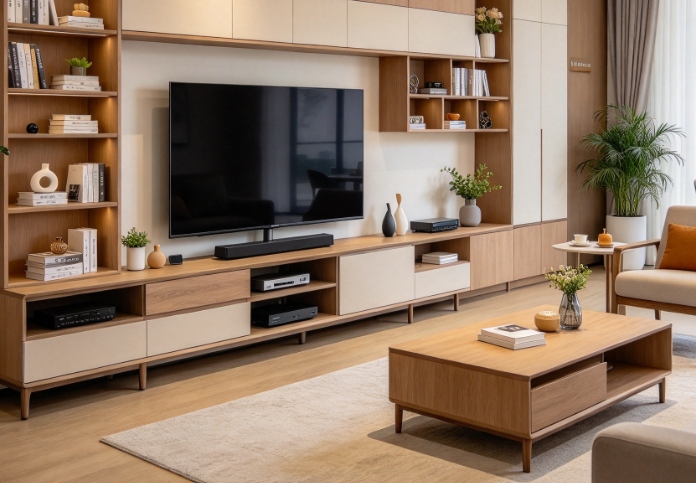
A modern TV console is no longer only a platform for a screen. It can organize devices, hide visual clutter, support changing media habits, and give a living space a more settled architectural rhythm. For furniture buyers, the opportunity is to treat the console as a useful storage system rather than a single-purpose stand.
The media hub has to solve more than one problem
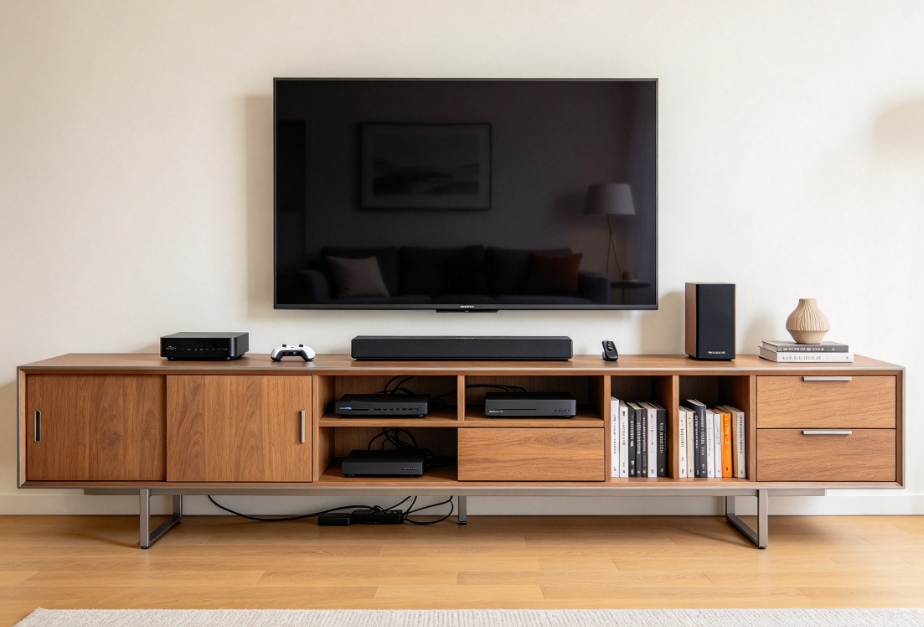
Today’s entertainment area often includes a display, streaming hardware, game devices, speakers, controllers, remotes, books, and decorative objects. A console that only holds the screen leaves the rest of the arrangement unresolved.
That is why modern media furniture increasingly combines open display, concealed storage, cable access, and a surface that can work with different room layouts. The strongest designs keep daily-use items reachable while reducing the visual noise of less attractive equipment.
The four functions buyers should evaluate
- Display: supports the screen and frames the viewing zone.
- Access: keeps frequently used devices and remotes reachable.
- Concealment: hides cables, accessories, and visual clutter.
- Adaptability: allows the piece to work as storage beyond the media setup.
A useful console separates open and concealed storage
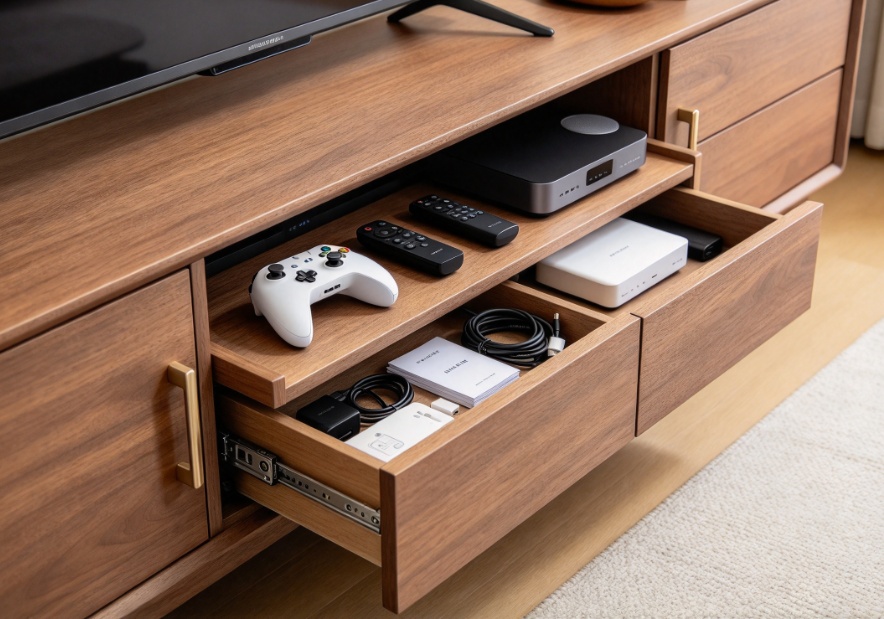
Open storage works well for devices that need access, ventilation, or a visible display position. Concealed storage is better for controllers, manuals, cables, spare accessories, and objects that would otherwise make the room look busy.
A balanced layout usually feels more useful than a wall of closed doors or a completely open shelf. The design should reflect the user’s daily habits and the amount of equipment expected in the target market.
A well-planned tv console table can therefore be evaluated by how clearly it divides display, access, and concealment rather than by its silhouette alone.
Material and proportion shape the room’s visual weight
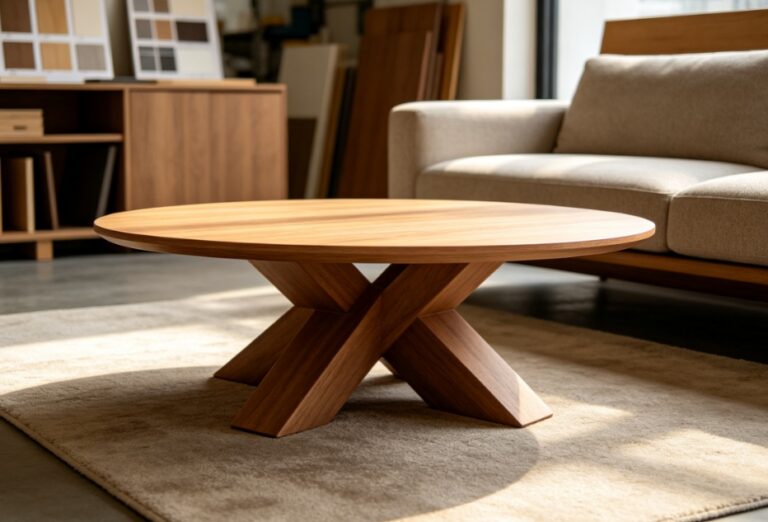
Material changes how a console reads in the room. Wood surfaces can add warmth, metal can introduce structure and a lighter industrial character, glass can increase visual openness, and mixed materials can help the piece relate to other furniture in the collection.
Proportion matters just as much as material. A console that is too narrow can look unstable beneath a wide screen, while an oversized unit can dominate a compact room. Buyers should evaluate width, depth, height, and the relationship between the screen, storage modules, and surrounding seating.
A practical evaluation table
| Design question | What to look for | Why it matters |
| Screen support | Stable top and suitable overall proportion | Keeps the focal point visually balanced |
| Device access | Open or reachable zones for everyday equipment | Makes use more convenient |
| Clutter control | Doors, drawers, or enclosed compartments | Keeps accessories visually quiet |
| Collection fit | Materials, colors, and lines that relate to other pieces | Supports a coherent room range |
Multi-purpose design extends the product’s value
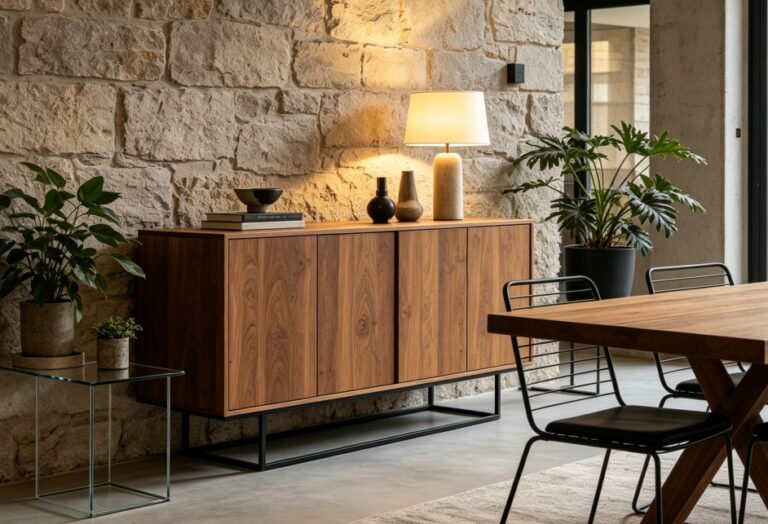
A media console can serve as a storage cabinet, low sideboard, display base, or living-room organizer when the room changes. This flexibility makes the product easier to place across different housing types and retail collections.
The key is to make the additional uses believable. Storage access, surface strength, proportions, and visual language should support more than one arrangement without making the furniture look like a compromise.
Collection thinking makes media furniture easier to merchandise
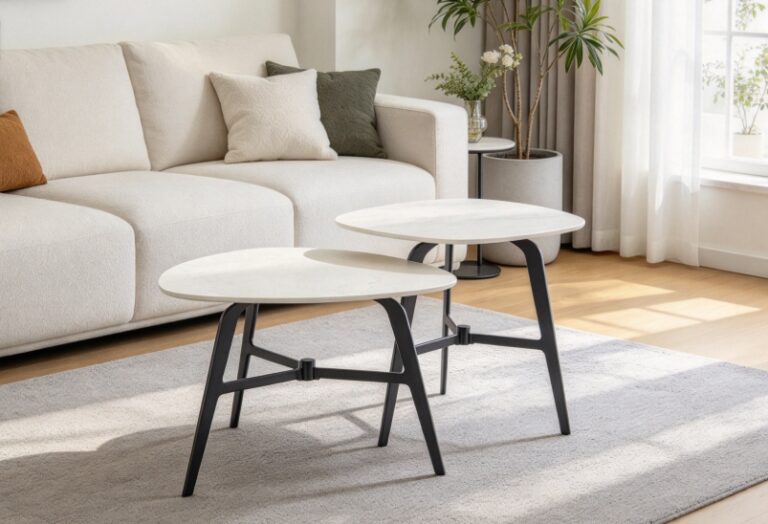
Retailers and wholesalers can make a media-hub range easier to understand when consoles are shown beside related storage, coffee tables, side tables, or seating. Customers then see the console as part of a room solution instead of an isolated electronic accessory.
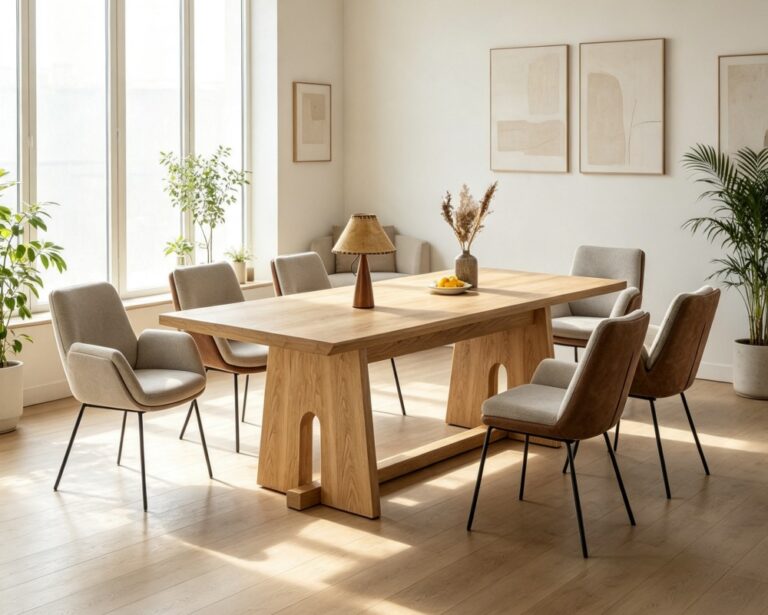
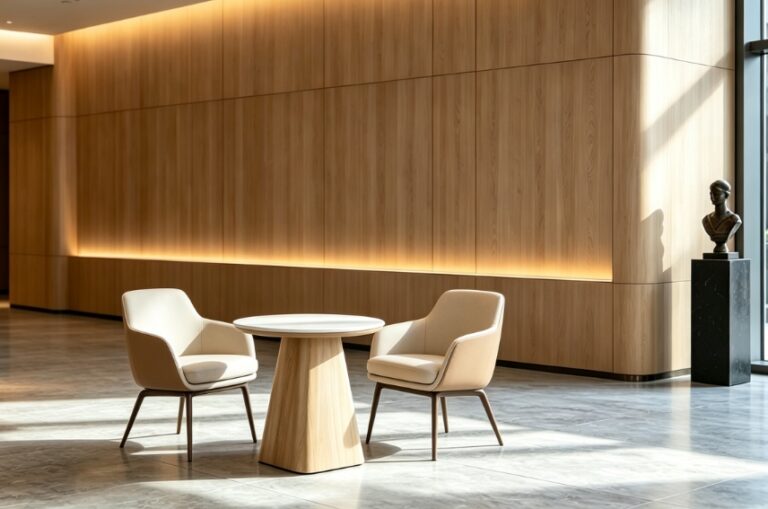
SANQ Furniture works across dining tables, dining chairs, coffee tables, coat hangers, and storage-oriented furniture categories, which creates room for coordinated modern collections. The relevant commercial opportunity is to keep the finish and style language consistent without forcing every product into the same function.
For buyers building a wider living room storage furniture range, the useful comparison is how the console works with adjacent tables and storage pieces in the same visual system.
Customization should support real room differences
Customization is most useful when it solves a clear room or collection problem. Buyers may need to adjust dimensions, colors, materials, or style details to fit a local market, a specific interior program, or a coordinated product launch.
A controlled custom program is easier to sell and replenish than unlimited variation. The brief should define the target screen range, storage priorities, finish family, and any repeat-order rules before a sample is approved.
A flexible storage cabinet solutions program can then be positioned around organization and adaptability instead of relying on decorative styling alone.
Summary: design the console as part of daily life
The modern TV console succeeds when it supports the screen, organizes equipment, controls clutter, and remains useful as the room evolves. For a furniture range, that means balancing open access, concealed storage, proportion, material, and collection compatibility in one understandable product story.
Share your target room type, storage priorities, dimensions, and finish direction with SANQ Furniture through contact us to explore a media-hub concept that fits your collection.
FAQ
What makes a TV console a media hub?
A media hub combines screen support with organized space for devices, accessories, display items, and concealed storage. It helps the entertainment area work as a complete part of the room rather than a stand with equipment placed around it.
Should a TV console use open or closed storage?
Most rooms benefit from a combination. Open zones keep frequently used devices accessible, while closed storage hides cables, controllers, manuals, and other items that create visual clutter.
Can a TV console be used as a storage cabinet?
Yes, when the proportions, surface, access, and internal storage are suitable for broader use. A console can become a low sideboard or living-room organizer when its design does not depend only on the screen.
What materials work well for modern media furniture?
Engineered wood panels, solid wood, metal, glass, PU, and fabric can all play different roles. The most suitable choice depends on the desired visual weight, cleaning needs, durability, and relationship with the wider furniture collection.
What should wholesalers confirm before developing a console range?
Confirm target room types, screen proportions, storage priorities, dimensions, materials, finish references, sample requirements, and how the console will be merchandised with related furniture.