A finish can quietly decide whether a furniture collection feels credible in a showroom, holds up in daily use, and fits a buyer’s material brief. For distributors planning modern collections, low-VOC choices need to work with the furniture design rather than appear as an afterthought.
A finish brief begins with the room
Wholesale buyers often receive a color direction before they receive a complete material brief. Begin with the room: restaurant dining, apartment living, retail display, or a mixed commercial setting. Light, daily contact, food-service cleaning, and the visual role of the piece all change the sensible finish choice. A finish that looks restrained in a sample may look much darker once it is repeated across a large run of tables.
A lower-emission finish is not one universal coating or a single purchasing label. It is a material-and-process decision that affects appearance, touch, cleaning expectations, color consistency, and how a buyer documents the collection for its own market.
Questions that make a brief usable
A concise brief works when it describes the operating situation rather than repeating generic product language. The buyer should name the room, the people using it, the likely daily contact, and the visual outcome the furniture needs to create. Those details give a designer and production team a practical basis for evaluating materials, proportions, and finishing choices.
The approval conversation
Approval is easier when the decision is recorded in the same language used by the people who will inspect the finished furniture. Note the agreed surface, color direction, scale, and use condition, then keep those points with the order. This does not remove natural material variation, but it makes the intended result clear and gives a project team a fair basis for checking whether the delivered pieces fit the brief.
Ask which visible surfaces are coated and which are naturally finished.
Confirm the intended room use, cleaning routine, and expected contact points.
Keep the approved color and sheen sample attached to the purchase record.
What low-VOC selection should clarify
The useful question is not whether a product uses a fashionable environmental phrase. It is whether the selected coating, substrate, and curing route fit the intended item. Buyers should request a clear description of the finish and avoid treating a general factory capability as proof for every material combination. This keeps a sustainability conversation specific enough to be useful.
The first selection should remain visible in the order discussion. For low VOC furniture finishes, a buyer should connect the search phrase to the actual room, furniture type, and practical outcome rather than use it as a broad label. That small discipline keeps the conversation focused on what the finished piece must do and how it will be reviewed after installation.
For a wider collection view, review contemporary furniture product collections alongside the specific room and usage brief.
Metal and wood need different conversations
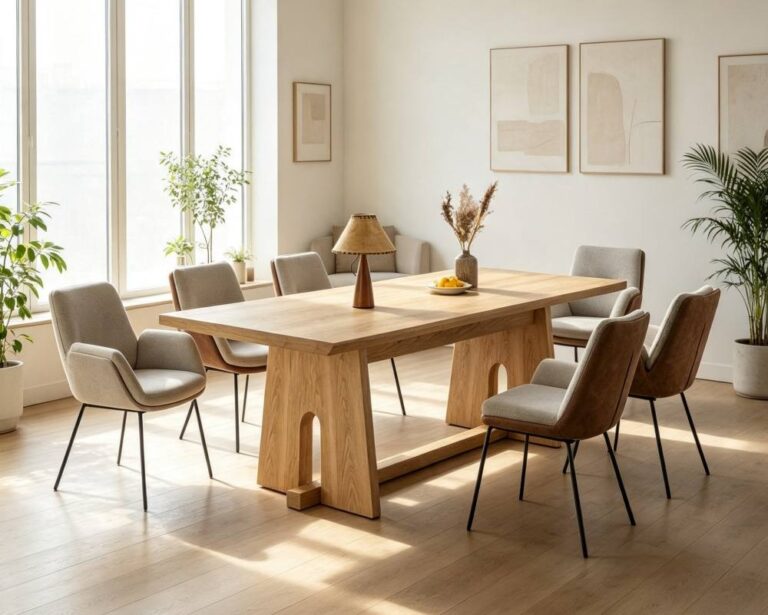
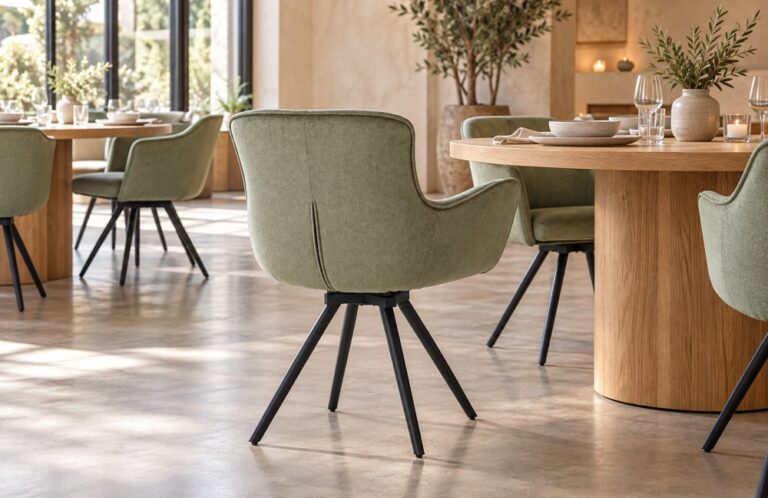
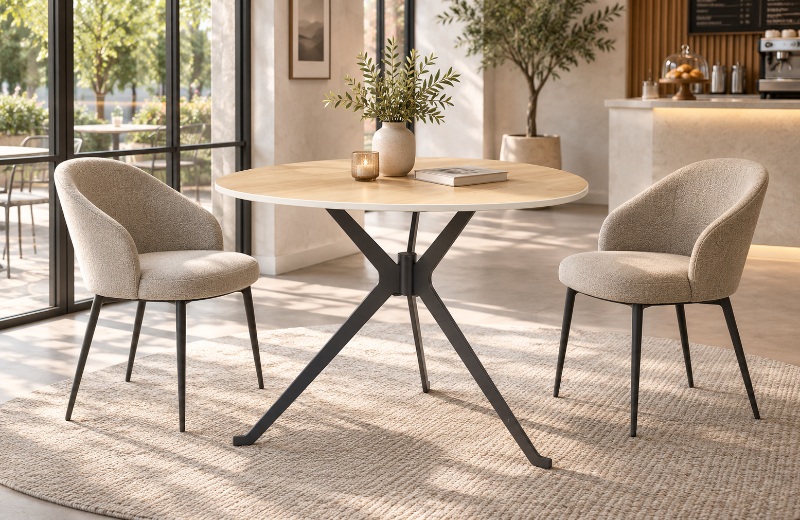
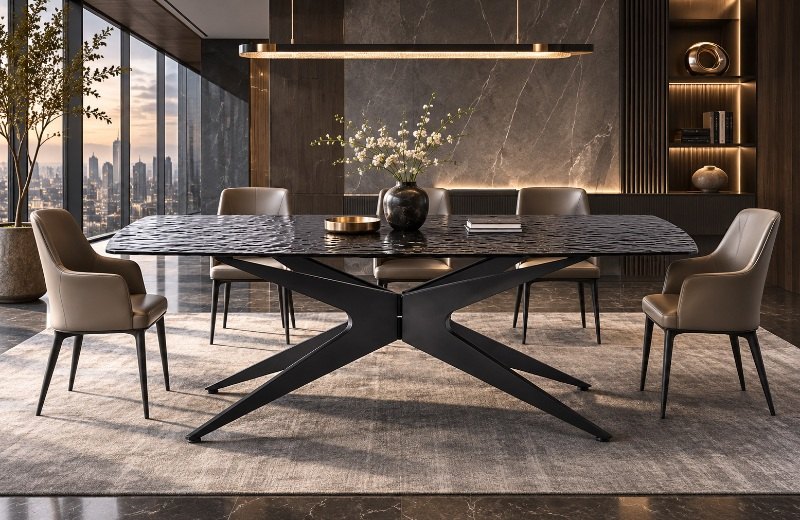
For powder coated metal furniture, frame geometry matters. Welds, corners, feet, and hand-contact areas deserve close visual review because they are where a finish meets daily use. Wood dining table finishes need a separate review of grain, color variation, edge treatment, and sheen. Matching both materials by color alone can make a collection feel flat; matching their visual temperature is usually more effective.
SANQ Furniture develops contemporary tables and seating in wood, metal, glass, fabric, and PU. That mix makes finish selection practical: wood surfaces, metal frames, and upholstered pieces each need a finish conversation that matches their construction and intended room.
Relevant options can be compared through powder coated metal furniture for modern projects, where seating scale and finish language can be reviewed as part of the overall scheme.
Sampling turns a promise into a decision
A physical sample should be seen under lighting close to the final environment. Compare it beside upholstery, tabletop material, and nearby metal. Record the agreed visual standard before a larger order starts. SANQ Furniture can adapt dimensions, colors, materials, and styles for project work, so a clear brief gives the design and production teams a more dependable point of reference.
|
Surface |
Useful question |
Project implication |
|---|---|---|
|
Estructura metálica |
How will the coating handle routine wiping? |
Helps set expectations for busy dining and hospitality areas. |
|
Wood tabletop |
What texture and sheen support the design? |
Keeps the visual language aligned across a collection. |
|
Mixed materials |
Where do materials meet? |
Prevents a polished frame from overpowering a warm top. |
A workable approval route
A buyer can protect both design intent and production timing by separating concept approval from final production approval. First agree on the palette and material direction. Then approve a sample that shows the actual surface relationship. Finally, make the inspection points visible to everyone handling the order. That sequence is more reliable than trying to solve color, care, and material questions after pieces are packed.
The most useful production conversations stay close to the project itself. A buyer who shares a measured layout, the relevant adjacencies, and the expected pattern of use gives the furniture team room to solve practical details early. It also creates a simpler review process because the final piece can be checked against a specific scenario, not a collection of generic preferences.
For coordinated tabletop planning, explore wood dining table finishes for contemporary collections before finalizing the approval sample.
Practical takeaway
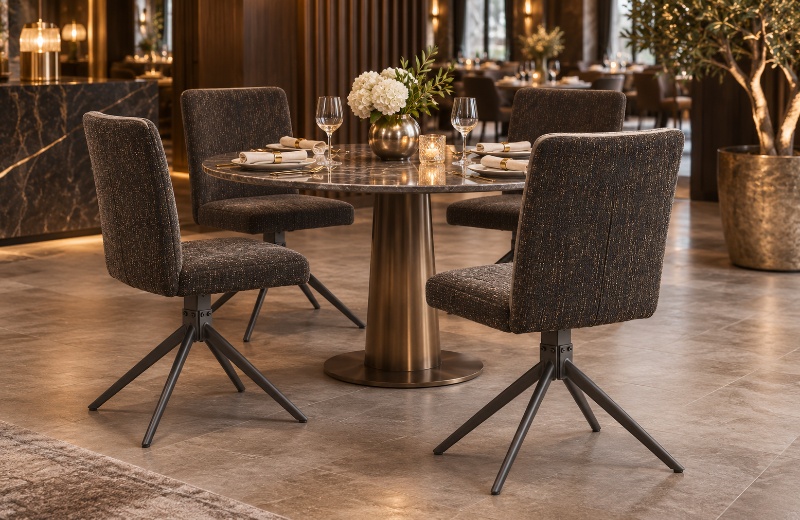
The strongest project decisions connect visual intent with ordinary use. When the brief names the room, the furniture role, the operating pattern, and the approval point, the collection is easier to evaluate and easier to deliver consistently. A short, specific decision record is more useful than a long list of disconnected preferences.
For project-specific dimensions, materials, or finish coordination, contact us with the layout and intended-use brief so the discussion can begin with the right constraints.
Preguntas frecuentes
Is low VOC the same as a furniture certification?
No. A coating description and a certification are different claims. Keep the request specific to the item, finish, and documentation needed for the target market.
Do matte finishes suit commercial furniture?
They can, but the buyer should review cleaning expectations and visible-contact areas. A matte look should support the operating environment, not only the mood board.
Why review metal and wood together?
Mixed-material furniture is read as one object. Looking at both surfaces together helps avoid clashing gloss, color temperature, or visual weight.
Can a project use several finishes?
Yes, when the palette has a clear hierarchy. Limit the number of dominant effects and review them together so the collection remains coherent.
What should appear in the final finish brief?
Include item scope, material, color reference, sheen direction, sample approval, and any room-use concerns that affect care or appearance.