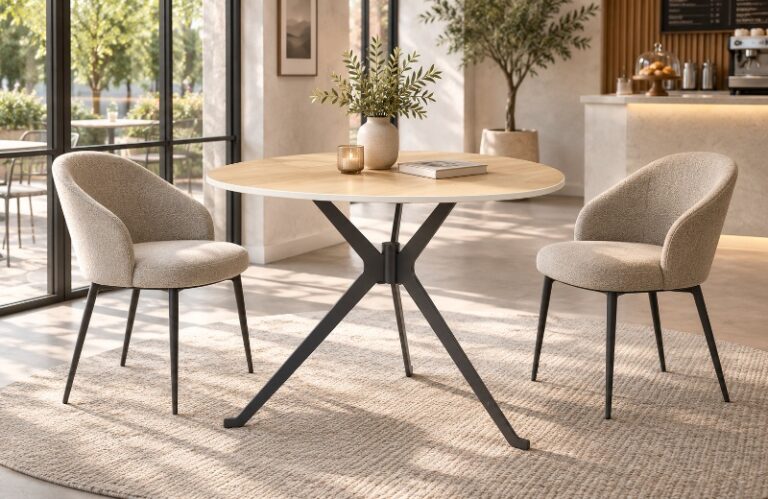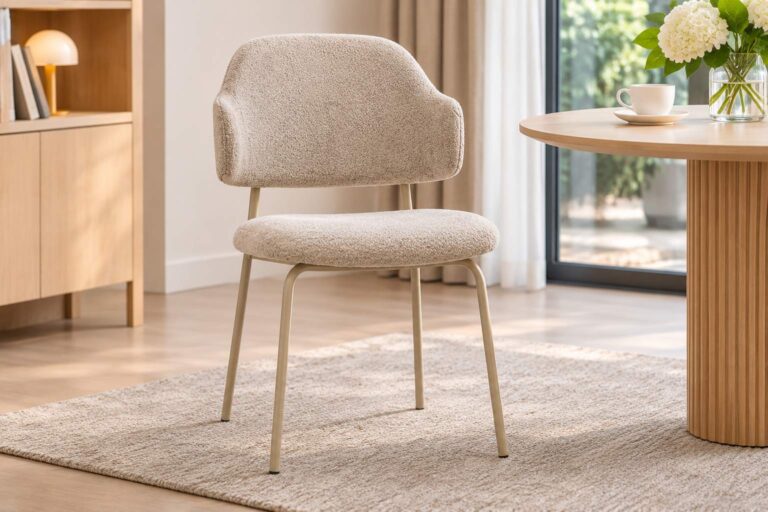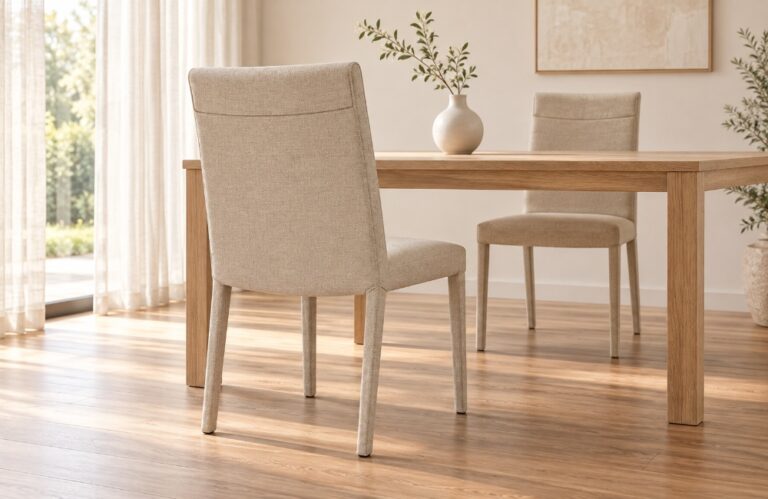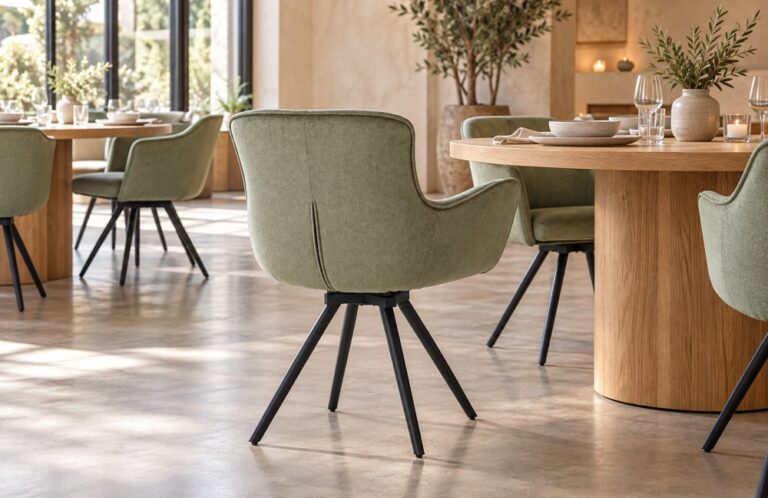
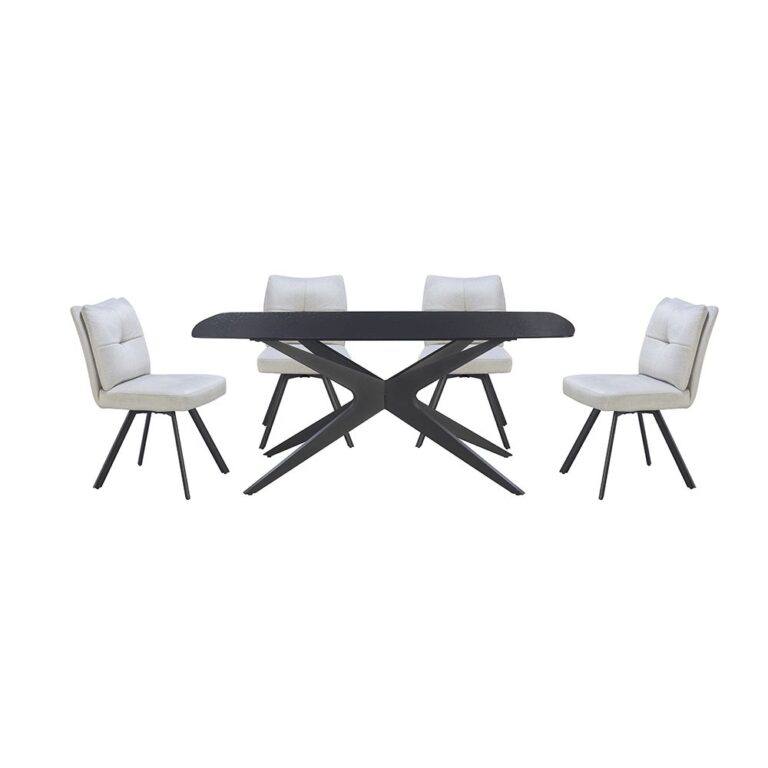
Before buying a container of dining furniture, we recommend you spend a few minutes with the item list and put the photographs aside. You can see a table and four chairs in a picture. You cannot see whether the supplier priced four chairs, six, or a separate quantity requested for another part of the project. That needs an answer from the quotation.
There is nothing unusual about asking for the contents of a set to be specified. The supplier needs a production quantity and you need a receiving quantity; you ought to be working from the same numbers. The five mistakes discussed here are the omissions we recommend you look for while reviewing that purchase, before the instruction reaches production.
Mistake One: Letting the Photograph Define the Set
In this hypothetical 200-set order, the number of chairs has yet to be stated. Perhaps the room plan needs six at some tables and four at others. Perhaps a few additional chairs are wanted for replacements. Until someone writes down those quantities, “200 sets” is only a description of an intention.
We recommend you split that line into a table entry and a chair entry, with the selected model codes beside both. Put a second table size on another line. Do the same for a different chair finish. You can still group the items as sets for commercial purposes, but the people counting and packing them need to see the components.
The room schedule is the place we recommend you begin when selecting bulk dining sets for projects. You might like a catalogue combination but need a different number of its components. Send that mix with the inquiry, giving any later-phase allocation explicitly. The photograph can accompany the inquiry as a design reference.
We recommend you ask a colleague outside the selection meeting to read the list. Their questions reveal where the conversation is doing work that the document should do. Walnut, for instance, might have been discussed as a finish in the meeting, but a reader could interpret it as timber. Add the construction description and remove the ambiguity while the order is still under review.
Mistake Two: Reviewing the Chair Without Its Table
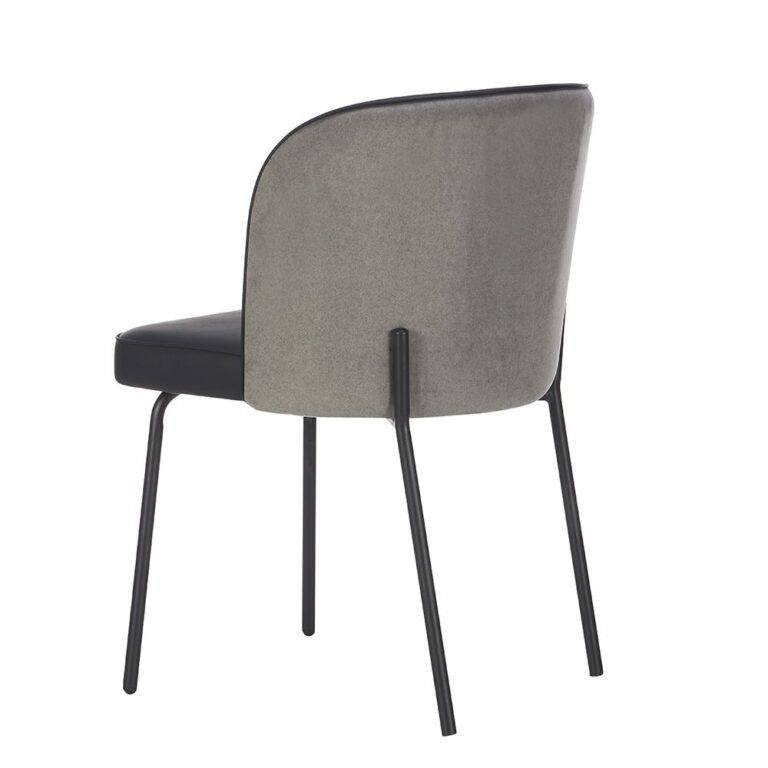
The second error is harder to notice on paper. You can have an acceptable chair drawing and an acceptable table drawing without having reviewed the pair. Where would a chair arm sit in relation to the apron? How much room does the base occupy beneath the top? A seat-height measurement doesn’t answer either question by itself.
A representative pair would be useful at the sample review. We recommend you try moving the chair into and out of a seated position, as well as looking at it. Should an arm touch the apron, put that observation against the drawing. It gives the designer a location and a movement to examine, whereas a general objection to the set leaves too much room for interpretation.
For restaurant dining chairs in bulk, we recommend you allow time to look at the upholstery and back support too. Someone has to make a physical judgment, rather than rely on a picture. Keep the accepted sample identifiable so the later inspection has a reference for what the team reviewed.
One further point belongs in the change record. If the approved table receives a new base or apron, the chair relationship may need reviewing again. We recommend you send the accepted chair reference with that request and ask for the revised clearance to be checked. Keeping the original colour does not tell you whether the new geometry is suitable.
Resolve What the Finish Name Means
A walnut finish could sit over a panel. It could also describe the appearance of a wooden part. Get the material and finish written separately. For surfaces that must coordinate, keep their approved references together, instead of expecting a screen image to settle a colour disagreement at delivery.
Mistake Three: Calculating the Saving Too Soon
Price approval tends to focus attention on the total. Before calculating a saving, we recommend you read the exclusions and then go back to the item description. Has the less expensive supplier offered the same construction? Is packing included in both prices? What about the sample and inspection scope?
A difference isn’t necessarily a problem. You may prefer an alternative upholstery or a different packing arrangement once it is explained. What matters is knowing that you are comparing alternatives. Put them on separate lines so the colleague approving expenditure can see what the lower figure buys.
For a comparison of commercial dining tables for projects, we recommend you prepare one brief and use it for all the inquiries. The selected size, construction, finish, quantity and delivery scope belong on it. Suppliers can then identify an alternative against that brief, and your team can decide whether to accept it with the difference visible.
| Part of the offer | Reference to compare | Question for an incomplete quote |
|---|---|---|
| Set contents | Item codes and quantities | How many chairs were allowed? |
| Materials and finish | Construction and accepted sample | Is an alternative being priced? |
| Inspection and packing | Agreed scope and packing reference | Which services are excluded? |
| Delivery | Named place and responsibilities | What happens after this point? |
An incomplete comparison sheet can go back with the inquiry. Mark the unanswered fields and ask for the revised quotation against them. We recommend keeping the questions and answers on that sheet, so the next reviewer can follow the scope behind the accepted price without collecting separate messages about the same item.
Mistake Four: Accepting Two Words About Packing
“Export packing” sounds reassuring. It still leaves questions. What protection is proposed for the tabletop corners? How will the finished surfaces be separated? Which label lets your receiver distinguish two chair colours without opening every carton?
Ask for a packing reference for the selected models and look at it alongside the samples. An exposed leg or projecting corner is an obvious point to discuss. There may be a different method for the table and chair, so don’t expect one illustration to answer for both. Review any stacking or loading proposal for the actual cartons as well.
Receiving requirements belong in that conversation. A single warehouse may only need model and finish identification; a project with several locations may need additional routing information. Tell the supplier what your receiving team needs to see. The factory can’t infer your internal distribution system from a purchase quantity.
No packing review can promise an incident-free journey. What you can establish is the protection proposed for your order and the information available at receiving. We recommend you leave packing as an open approval item until those details are understood, rather than treating the phrase in the quotation as an adequate reference.
Mistake Five: Keeping Approval in Somebody’s Inbox
Consider a finish change after sample approval. No quantities change and the buyer accepts it in an email. Unless that decision reaches the order reference, the person checking production might still be working from the original sample. The issue is which version controls acceptance, not how small the change seemed.
The approval file needs the accepted drawing or sample, construction, finish, packing and inspection scope. We recommend you include the authorized approver there too. A later revision can then identify what it replaces, who accepted it and the agreed cost or timing effect. That is enough for someone joining the project to follow the current instruction without access to the original buyer’s inbox.
For orders with SANQ Furniture, there are several inspection stages to discuss. Incoming material sampling precedes production; assembly checks address alignment and stability. At the finished-batch stage, visual and safety inspection covers the whole batch, with a random 5-10% selected for performance and environmental re-inspection. Products found non-compliant are isolated for correction and another inspection before release.
We recommend you use that process as the basis for asking which checks and records apply to the selected models. The purchase may also need evidence for a destination-market requirement. Request the applicable report early enough for your team to review its scope, rather than assuming that an internal inspection description settles the requirement.
Ready to Sign?
Put the room schedule, quotation and accepted references beside one another. A quantity that disagrees, an unrecorded finish change or a blank packing field is something to resolve now. You are giving the maker and the receiver the same account of the order, which is what the review was meant to achieve.
Send the selected models, quantities and destination when you contact us. We can discuss the combination and any open points in the purchase scope. Our team will review your inquiry and respond within 48 hours with tailored recommendations to help optimize your furniture project.
FAQ
How Many Chairs Are Included in a Dining Set?
Use the quantity in the agreed item list. The number pictured in a catalogue doesn’t establish the contents of your order.
Can Two Separate Samples Approve a Pair?
They can support individual reviews, but check how the chair fits beneath the selected table as well. Keep that combination identified in the approval.
Should You Reject a Cheaper Quote?
First find out why it is cheaper. Check construction, services and exclusions against the same brief before deciding whether the offer suits you.
What Should the Carton Marks Show?
Agree the identification your receiving team needs, such as model, finish and quantity. Add routing information if the order is distributed across locations.
Who Should Approve an Order Revision?
Name the authorized approver in the order record. Keep the accepted change, replaced reference and any cost or timing effect together.