
We had been engaged in the Dining Chairs,Tables over 30 years. Our products sell to the whole world, Some of our bestselling countries are
Germany,Poland,Russia,Holland,France,England, Middle East and southeast Asia ETC.
1.Receive customer inquiry
2.Calculate cost and make quotation
Product quantity/model/color
delivery date
3.Make PI and confirm
4.Receive customer deposit
5.Arrange order / Pre-production sample
6.Prepare follow-up materials
(shipping mark,AI confirmation)
7.Book shipping space with freight forwarder
8.Arrange inspection(self-inspection/three-party)
9.Arrange loading into container
(trailer loading and customs declaration)
10.Send BL and confirm with customer
11.Send customs clearance documents (CI,PL)
12.Balance payment
Arrange telex release / Original B/L
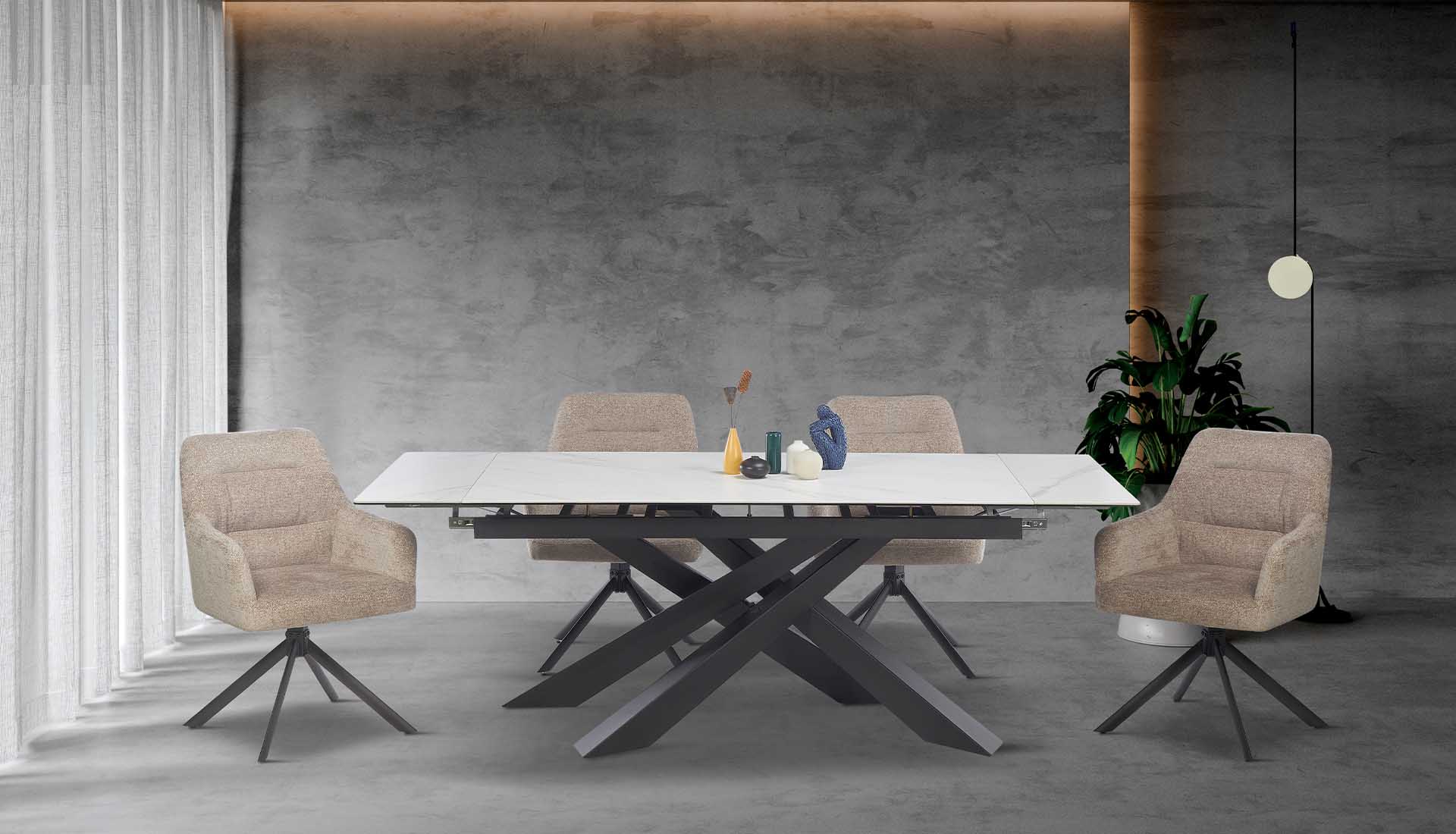
there are also challenges in the home furnishing OEM business. Quality control is crucial as any defect in the products can damage the reputation of both the brand and the OEM manufacturer.
OEM in the home furnishing industry is a complex yet vital part of the supply chain.
In the home furnishing industry, OEM (Original Equipment Manufacturer) means that a manufacturing company produces home furnishing products such as furniture, home textiles, or decorative items according to the designs and specifications provided by another company, usually a brand or a retailer. The OEM manufacturer focuses on the production process while the brand owns the intellectual property and is responsible for marketing and sales.
Brands often choose OEM for several reasons. Firstly, it allows them to avoid the heavy investment in setting up and maintaining their own manufacturing facilities. They can focus on their core competencies like design, marketing, and customer service. Secondly, OEM enables brands to quickly introduce new products to the market. They can work with multiple OEM partners to diversify their product lines and respond faster to changing consumer trends. For example, a home decor brand can easily launch a new collection of lamps or wall hangings by collaborating with an experienced OEM manufacturer.
OEM manufacturers in the home furnishing sector gain several advantages. They can fully utilize their production capacity and achieve economies of scale. By producing for different brands, they can spread their fixed costs and increase profitability. Also, they can access new design concepts and technologies from various brand partners, which helps them improve their manufacturing processes and stay updated with the latest industry trends. This continuous learning and improvement can enhance their competitiveness in the market.
Quality control is a critical aspect. The brand usually provides detailed quality standards and specifications to the OEM manufacturer. The OEM factory then has its own internal quality control system. This includes inspections at different stages of production, such as raw material inspection, in-process inspection, and final product inspection. For instance, in furniture manufacturing, the OEM may check the quality of the wood, the precision of the joints, and the finish of the product. Regular audits by the brand or third-party inspection agencies are also common to ensure compliance with quality requirements.
We’re Ready to Support Your Global Furniture Business